
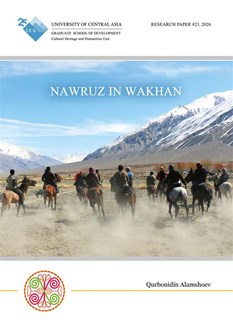
Nawruz in Wakhan
This article is the result of the author’s field observations and direct participation in the Nawruz celebrations in the Wakhan and Zebak districts of Afghanistan in March 2015. The study reveals a vivid picture of Nawruz rituals in one of the most distinctive corners of historical Khorasan and Badakhshan, based on personal experience, interviews with elders, khalifa, and guardians of tradition, as well as comparisons with materials from Tajikistan.
The author examines Nawruz as a holistic system of knowledge, uniting ancient concepts of time, nature, and moral order. A special place is occupied by the figure of the khalifa, who determines the precise and permitted times of rituals, their direction, and auspicious formulas based on ancient risola (books) on nujum (astrology). The stages of preparation for the holiday and the key rituals connected with the celebration of Nawruz, the main national celebration among the Wakhi and Zebak peoples, are described in detail.
The methodological basis of the study was formed by the methods of participant observation, oral history, ethnolinguistic recording of terminology, as well as a comparative analysis of ritual practices in the region.